
Building an ai-powered demand generation funnel in 2026 means leveraging advanced analytics and machine learning to automate and optimize every stage, from awareness to conversion. This approach moves beyond traditional segment-based targeting to hyper-personalization, significantly improving lead quality and conversion rates. While the core principles of a funnel remain stable, the tools and methodologies for execution are rapidly evolving, making ai integration a critical competitive advantage.
What are the Core Stages of an ai-Powered Demand Generation Funnel?
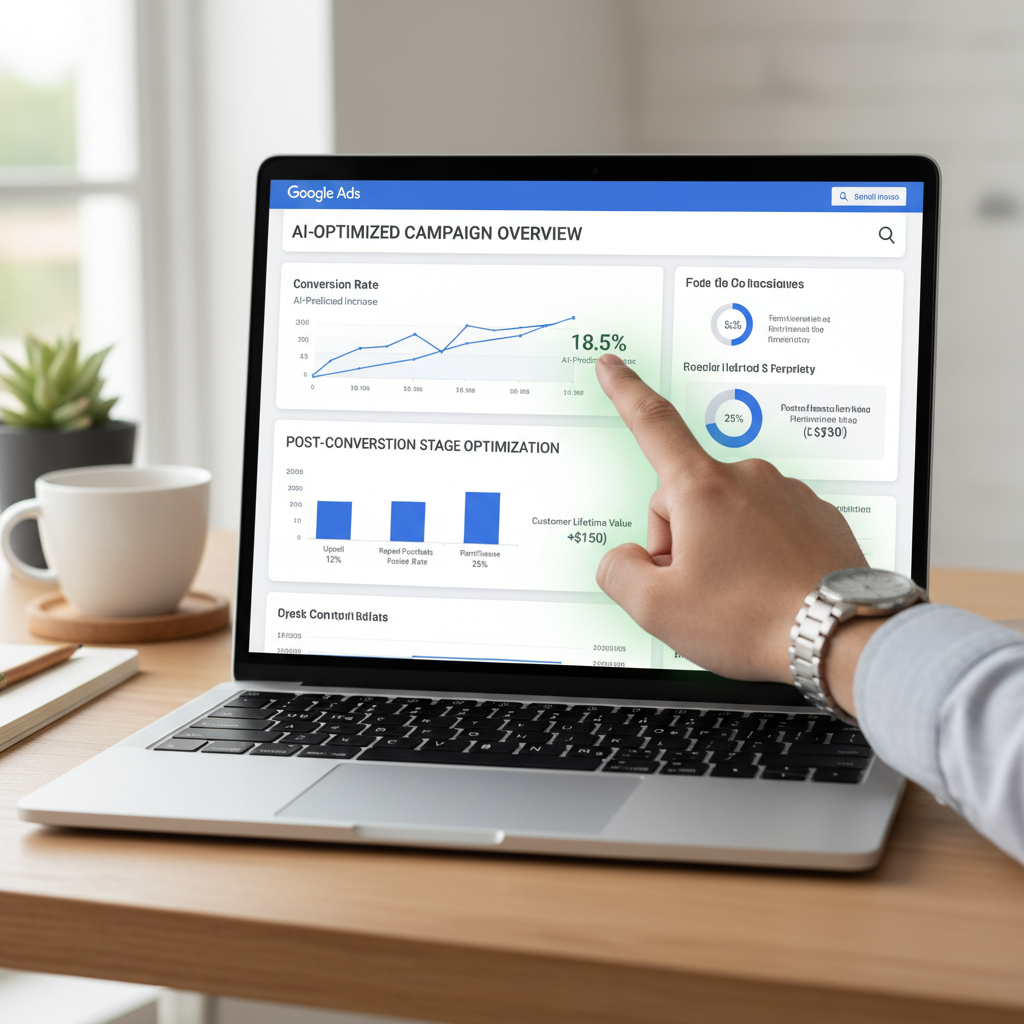 Google Ads performance, illustrating how to build a demand generation funnel with ai by optimizing campaign metrics." style="width:100%;height:auto;border-radius:12px;" loading="lazy" />
An ai-powered demand generation funnel fundamentally refines the classic marketing stages: awareness, engagement, consideration, and conversion, by infusing data-driven automation and predictive intelligence. This ensures resources are focused on the most promising prospects. A comparison reveals that while traditional funnels rely on manual segmentation and rule-based automation, ai funnels use dynamic profiling and predictive scoring.
Awareness: ai-Driven Audience Identification and Content Creation
At the top of the funnel, ai excels at identifying ideal customer profiles (ICPs) and generating highly relevant content. Stable elements here include the need for broad reach and compelling messaging, but context-specific applications involve ai's ability to analyze vast datasets for emerging trends and audience behaviors.
ai for Audience Identification: ai algorithms can analyze historical customer data, industry trends, and third-party data to pinpoint lookalike audiences with a higher propensity to convert. Tools like predictive analytics platforms can identify micro-segments that human analysis might miss, often achieving a 15-20% improvement in targeting accuracy compared to manual methods. For instance, an ai might identify that prospects who engage with specific technical documentation on competitor sites are 3x more likely to convert within 60 days. ai for Content Generation & Optimization: ai content platforms can generate initial drafts of blog posts, social media updates, and ad copy tailored to specific audience segments and funnel stages. They can also optimize existing content by suggesting keyword variations, readability improvements, and sentiment adjustments based on real-time performance data. This can reduce content creation time by up to 40% and improve engagement rates by 10-15%. Consider an ai suggesting a headline variant for a landing page that includes a specific pain point identified in customer support tickets.
Engagement: Personalizing Interactions with ai Chatbots and Dynamic Content
Mid-funnel engagement is where ai truly shines, transforming generic interactions into personalized experiences that nurture leads effectively. The stable goal is to build rapport and provide value, but ai introduces dynamic, real-time adaptation.
ai Chatbots for Lead Qualification: Advanced ai chatbots can handle initial inquiries, answer FAQs, and qualify leads based on predefined criteria, freeing up human sales teams for higher-value interactions. These bots can integrate with CRM systems to access prospect history and offer personalized responses, improving lead qualification rates by 25-30%. A well-configured chatbot can identify a prospect's budget and timeline, routing high-priority leads directly to a sales representative, while nurturing others with relevant content. Dynamic Content Personalization: ai-powered content management systems can dynamically adjust website content, email sequences, and ad creatives based on a user's real-time behavior, preferences, and demographic data. This hyper-personalization can lead to a 2x increase in click-through rates and a 50% improvement in conversion rates. For example, a returning visitor interested in 'SaaS analytics' might see case studies related to their industry, rather than general product features. For more on optimizing ad creatives, explore our guide on Meta Ads Creative Testing: Advanced Strategies for 2026.
Consideration: ai-Driven Lead Scoring and Nurturing
As prospects move deeper into the funnel, ai's predictive capabilities become indispensable for prioritizing efforts and delivering timely, relevant information. The stable objective is to move prospects towards a purchasing decision, with ai providing the precision.
Predictive Lead Scoring: ai models analyze vast amounts of data - including website visits, email opens, content downloads, social media interactions, and CRM data - to assign a real-time lead score. This score predicts the likelihood of conversion, allowing sales and marketing teams to prioritize high-potential leads. Companies using predictive lead scoring report a 10-15% increase in sales productivity and a 5-10% boost in revenue. This moves beyond simple demographic scoring to behavioral intent signals. ai-Powered Nurturing Sequences: ai can orchestrate personalized email and content nurturing sequences, recommending the next best action or piece of content based on a lead's evolving engagement and score. This ensures leads receive the most relevant information at the optimal time, reducing churn and accelerating the sales cycle. An ai might trigger an email with a product demo link immediately after a prospect downloads a specific whitepaper, rather than waiting for a scheduled sequence.
How Can ai Optimize Conversion and Post-Conversion Stages?
ai's role extends beyond lead generation, significantly impacting the conversion stage and even post-conversion customer retention. The stable goal is to close deals and foster loyalty, with ai providing critical insights and automation.
Conversion: Sales Enablement and Predictive Analytics
At the bottom of the funnel, ai empowers sales teams with insights and automation, streamlining the conversion process. While human interaction remains key, ai provides the intelligence layer.
Sales Enablement with ai: ai tools can analyze sales calls, identify winning patterns, and provide real-time coaching to sales representatives. They can also recommend personalized sales collateral, pricing strategies, and objection handling techniques based on prospect profiles and historical success data. This can shorten sales cycles by up to 20% and improve close rates by 5-10%. Imagine an ai suggesting a specific case study to a sales rep based on the prospect's industry and stated challenges during a live call. Predictive Churn Analysis: Post-conversion, ai can predict which customers are at risk of churning by analyzing usage patterns, support ticket history, and engagement metrics. This allows proactive intervention, such as personalized offers or support outreach, to retain valuable customers. Reducing churn by just 5% can increase profits by 25-95%. For optimizing your paid ad campaigns that drive these conversions, consider our google ads optimization checklist 2026: Practical Guide for 2026.
Post-Conversion: ai for Upselling, Cross-selling, and Loyalty
ai continues to add value after a sale, identifying opportunities for growth and enhancing customer lifetime value. The stable objective is customer retention and expansion, with ai providing the data-driven recommendations.
ai-Driven Product Recommendations: For existing customers, ai can analyze purchase history, browsing behavior, and demographic data to recommend relevant upselling or cross-selling opportunities. This can significantly increase average order value and customer lifetime value. E-commerce businesses, for instance, report up to 35% of their revenue coming from ai-powered recommendations. Customer Service Automation: ai-powered virtual assistants and knowledge bases can resolve common customer issues quickly and efficiently, improving customer satisfaction and reducing support costs. For complex issues, ai can route customers to the most appropriate human agent, equipped with all relevant customer history. This enhances the overall customer experience, fostering loyalty.
What are the Key Trade-offs and Implementation Steps for ai in Demand Gen?
Implementing ai in demand generation requires a strategic approach, balancing the benefits of automation and intelligence against the need for data quality and human oversight. The stable trade-off is always between automation efficiency and human nuance, with ai pushing the boundaries of what's possible.
Implementation Steps Checklist:
- Define Clear Objectives: Start with specific, measurable goals. Are you aiming to reduce CAC, increase MQL-to-SQL conversion, or improve lead quality? Without clear objectives, ai implementation can become a costly experiment.
- Audit Your Data Infrastructure: ai models are only as good as the data they consume. Ensure your CRM, marketing automation platforms, and analytics tools are integrated and provide clean, consistent data. This is often the most challenging, yet critical, step.
- Start Small, Scale Gradually: Begin with a pilot project in one area, such as ai-powered lead scoring or content personalization for a specific segment. Measure results rigorously before expanding. This aligns with a performance marketing framework for lean startups 2026: Practical Guide for 2026.
- Choose the Right ai Tools: Evaluate vendors based on their integration capabilities, scalability, and alignment with your specific use cases. Prioritize tools that offer clear ROI metrics and robust support.
- Train Your Team: ai augments human capabilities, it doesn't replace them. Train your marketing and sales teams on how to effectively use ai tools, interpret their insights, and integrate them into their workflows.
- Monitor and Iterate: ai models require continuous monitoring and refinement. Regularly review performance metrics, feed new data back into the system, and adjust algorithms as needed to maintain optimal performance. Benchmarks for success often include a 10-15% improvement in lead-to-opportunity conversion within the first year.
Key Trade-offs to Consider:
Data Quality vs. ai Performance: Poor data input will lead to poor ai output (garbage in, garbage out). Investing in data hygiene and integration is paramount but can be time-consuming and costly. Automation vs. Human Touch: While ai automates repetitive tasks, critical human oversight is still required for strategic decision-making, creative content development, and complex customer interactions. Over-automating can lead to a loss of personalization. Cost vs. ROI: Implementing advanced ai solutions can involve significant upfront investment in software, integration, and training. It's crucial to project and track ROI meticulously to justify these costs. Complexity vs. Usability: Some powerful ai tools can be complex to set up and manage. Prioritize solutions that offer a balance of advanced capabilities and user-friendliness, especially for lean teams. For simpler ai solutions, consider an ai marketing copilot for small teams 2026 for beginners.
[Image: how to build a demand generation funnel with ai - המחשה מעשית 1]
Frequently Asked Questions (FAQs)
Q1: What is an ai-powered demand generation funnel?
An ai-powered demand generation funnel leverages artificial intelligence and machine learning to automate, personalize, and optimize every stage of the customer journey, from initial awareness to conversion and retention. It uses data to predict customer behavior, qualify leads, and deliver highly relevant content and interactions.
Q2: How does ai improve lead qualification in demand generation?
ai improves lead qualification by analyzing vast datasets of prospect behavior, demographics, and firmographics to assign predictive lead scores. These scores indicate a prospect's likelihood to convert, allowing marketing and sales teams to prioritize high-potential leads and focus resources more effectively than traditional, rule-based scoring.
Q3: What are the main benefits of using ai in demand generation?
Key benefits include increased lead quality, higher conversion rates, improved personalization at scale, reduced customer acquisition costs (CAC), enhanced sales productivity, and better customer retention through predictive analytics and tailored engagement.
Q4: Is ai replacing human marketers in demand generation?
No, ai is not replacing human marketers; rather, it augments their capabilities. ai automates repetitive tasks, provides data-driven insights, and enables hyper-personalization, freeing up human marketers to focus on strategy, creativity, and complex problem-solving. It acts as a powerful co-pilot.
Q5: What kind of data is essential for an effective ai demand generation funnel?
An effective ai demand generation funnel relies on clean, integrated data from various sources, including CRM systems, marketing automation platforms, website analytics, social media engagement, email marketing tools, and third-party data providers. The quality and breadth of this data directly impact the ai's performance and accuracy.
Conclusion
Building an ai-powered demand generation funnel is no longer a futuristic concept, but a strategic imperative for businesses aiming for sustainable growth in 2026. By integrating ai into each stage - from audience identification and content creation to lead scoring, personalization, and post-conversion engagement - organizations can achieve unprecedented levels of efficiency and effectiveness. While implementation requires careful planning, robust data infrastructure, and continuous optimization, the trade-offs are well worth the investment, yielding higher quality leads, increased conversion rates, and a significant competitive edge. Start small, learn fast, and leverage ai to transform your demand generation efforts into a precision-driven growth engine.
Ready to elevate your demand generation strategy with ai? Contact JOYO Marketing today for a tailored consultation and discover how our expertise can help you build a future-proof funnel.